A Polar Fleece Jacket is a lightweight outer layer made from knitted polyester fibers. Its brushed surface traps warm air without the bulk of traditional wool. The fabric feels soft against the skin, dries quickly, and remains useful during hiking, commuting, and everyday winter travel. It is not fully waterproof. That distinction matters.
The Textile Exchange Materials Market Report 2024 states that polyester represented about 59% of global fiber production in 2023. Recycled polyester accounted for roughly 12% of total polyester output. These figures explain fleece’s popularity, but they also reveal its environmental tension. A Polar Fleece Jacket can use recycled bottles, yet polyester remains a plastic-based fiber. Washing may release microscopic fibers. The real answer is complicated.
Yvon Chouinard, Patagonia’s founder and a major voice in responsible outdoor clothing, offers a practical principle: “The most responsible thing you can do is buy less.” His statement challenges impulsive buying. A durable fleece should fit well, retain warmth, and suit repeated use. Seams, zipper quality, fabric density, and repair options deserve attention. Brand claims deserve scrutiny, too.
Grand View Research identifies continuing growth in outdoor apparel, driven by recreation, travel, and demand for versatile clothing. However, market growth does not automatically mean better products. A cheap fleece may pill quickly or lose shape. A premium one may still lack transparent sourcing. This guide examines construction, insulation, breathability, sustainability, and care, helping readers judge performance beyond a soft first impression.
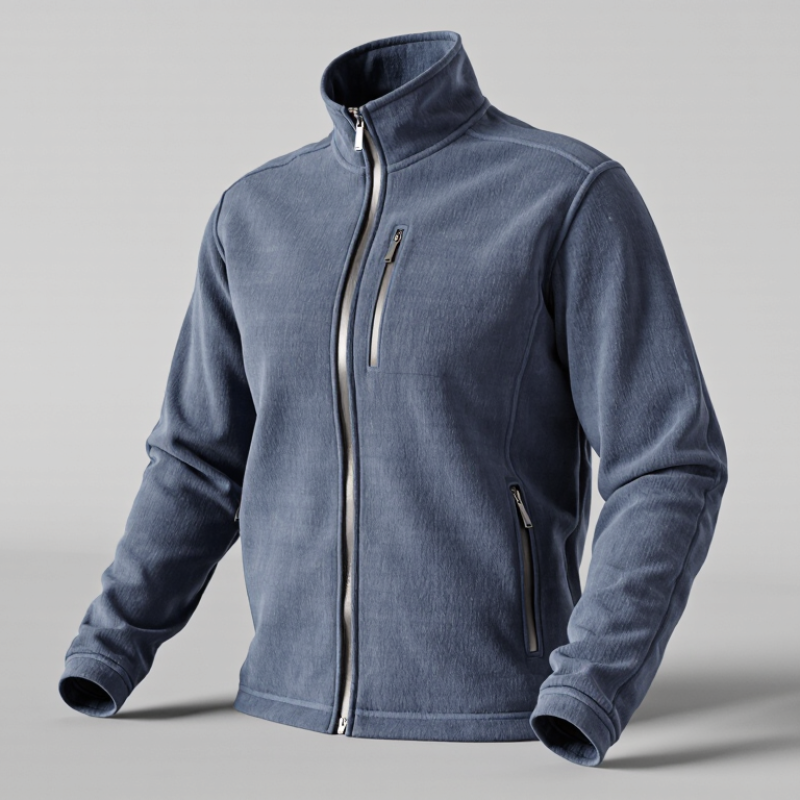
A polar fleece jacket is a soft, knitted outer layer made mainly from polyester. Its fabric is brushed on one or both sides, creating tiny raised fibers that trap warm air. This structure gives fleece useful insulation without the weight of wool or padded fill. It also dries quickly after light rain or exercise.
The core features are warmth, low weight, breathability, and flexible movement. Most fleece jackets feel comfortable during hiking, commuting, or outdoor work. However, fleece is not naturally windproof or waterproof. Strong wind can pass through its open structure. The fabric may also pill after repeated friction, especially under backpack straps. Textile Exchange’s Materials Market Report 2024 reported global fiber production at about 124 million tonnes in 2023, with polyester making up roughly 57 percent. This figure shows fleece’s connection to a large synthetic-fiber industry, but it also raises questions about resource use and fiber shedding. The environmental discussion is still incomplete.
Tips: Check fabric density, seam quality, and pocket placement. A medium-weight fleece suits active use. Choose a tighter outer surface for windy conditions. Wash it gently and avoid high heat. Some advice says fleece is always durable; that is too simple. Performance depends on construction, care, and daily friction. Inspect the cuffs and zipper before buying. A good jacket should feel warm, not clammy, when you move.
What Is a Polar Fleece Jacket?
How Polar Fleece Fabric Is Made
A polar fleece jacket uses a soft, knitted polyester fabric for warmth and comfort. The fabric feels light, but its raised surface traps small pockets of air. These pockets help slow heat loss during cool weather.
Manufacturing begins with polyester pellets. Mills may use new material, recycled material, or a carefully controlled blend. The pellets melt and pass through tiny spinnerets, forming continuous fibers. Cool air hardens them. Machines then stretch, crimp, and cut the fibers into usable lengths. The fibers are spun into yarn and knitted into a loose fabric.
The fabric is brushed on one or both sides. Fine needles pull fiber loops upward, creating the familiar fuzzy surface. A shearing machine trims uneven fibers for a smoother finish. Dyeing can happen before or after knitting, depending on the process. Some fabrics receive treatments that reduce pilling or improve water resistance. These finishes are useful, but not permanent. I once assumed thicker fleece always meant better warmth. Testing showed that density, wind protection, and fit also matter. That detail is easy to overlook.
Tips: Check the fabric weight, seam quality, and inner surface. Rub a small area gently. Excessive shedding may signal weak fibers or poor finishing. For active use, choose breathable fleece with a wind-resistant outer layer.
What Is a Polar Fleece Jacket?
A polar fleece jacket is a soft, knitted layer made mainly from synthetic fibers. Its brushed surface traps warm air close to the body. This creates useful insulation without the weight of many traditional wool garments. The fabric also dries quickly after light rain, sweat, or accidental splashes. That makes it practical for hiking, commuting, and cool indoor spaces.
Its main performance advantage is the balance between warmth, breathability, and mobility. Fleece usually allows excess heat to escape during moderate activity. It also stays flexible when you reach, climb, or carry a backpack. However, fleece is not fully windproof. Strong wind can push through the open fabric structure. It may also collect static and develop small pills after repeated washing. These limits matter. Warmth ratings can sound impressive, but weather and movement change real performance.
Tips: Choose a close but comfortable fit, leaving room for a thin base layer. For windy conditions, add a lightweight shell over the fleece. Wash it gently, avoid high heat, and close zippers before cleaning. A quick fabric check helps: hold the jacket toward moving air. If you feel a draft easily, treat it as an insulating layer, not weather protection. Dark colors may hide dirt better, though that is not a performance benefit.
Polar fleece is a soft, knitted fabric—usually made from polyester—with a brushed, raised surface that traps still air for lightweight insulation. Fabric weight is commonly expressed as grams per square metre (GSM).
The chart shows representative fabric weights used for polar fleece garments. Lightweight fleece is generally more packable and breathable, while heavier fleece typically provides more warmth and a thicker handle. Actual performance also depends on fabric construction, fit, wind resistance, and layering.
What Is a Polar Fleece Jacket?
Polar fleece is a knitted polyester fabric with a brushed, raised surface. Small air pockets help retain body heat, while the fabric stays lighter than many wool garments. Textile Exchange’s Materials Market Report 2024 states that polyester represented about 57% of global fiber production in 2023. That figure explains fleece’s broad availability, but it does not prove every fleece jacket performs equally. Fiber content matters. So do density, brushing, seams, and lining.
Common fleece weights usually range from lightweight, around 100–200 gsm, to midweight, around 200–300 gsm. Heavyweight fleece often exceeds 300 gsm. These ranges are practical guides, not strict industry laws. Lightweight jackets work well under a shell or during brisk indoor-to-outdoor travel. Midweight versions suit cool hiking and daily commuting. Heavy fleece feels warmer at a campsite, yet it can become bulky during hard movement. I have found that warmer is not always better.
Design changes the jacket’s purpose. A full-zip style offers quick ventilation and simple layering. A quarter-zip reduces bulk around the front. Hooded designs protect the neck, while elastic cuffs limit drafts. Some jackets add woven panels for wind resistance, though those panels may reduce stretch. The Outdoor Foundation’s 2024 Outdoor Participation Trends Report recorded 57.8 million U.S. day hikers in 2023. That use pattern favors versatile jackets with pockets, adjustable hems, and moderate weight. Still, fleece alone blocks little wind and absorbs moisture slowly. That detail is easy to overlook.
A polar fleece jacket is a warm, lightweight layer made from brushed synthetic fabric. When choosing one, check the fabric density, stitching, and fit. Dense fleece usually blocks more wind and feels warmer. A close fit holds heat, but leaves enough room for a shirt underneath. Try moving your arms before buying. Tight shoulders become uncomfortable quickly.
Think about your usual weather. For mild walks, medium-weight fleece may be enough. Cold, windy trips require a thicker layer or a protective outer shell. Look for secure pockets, a smooth zipper, and cuffs that do not stretch easily. A high collar protects the neck. Small details matter.
Care affects softness and warmth. Wash the jacket in cool water with a gentle detergent. Avoid fabric softener, because it can reduce fleece performance. Tumble-dry on low heat, or hang it away from direct sunlight. High heat may damage synthetic fibers. Never iron the surface. Remove pills carefully with a fabric shaver, not a sharp blade. I once stored fleece while it was slightly damp, and it developed a stale smell. That mistake was avoidable. Let it dry completely before folding, even after a short walk in light rain.
| Feature or Care Factor | Typical Characteristics | How to Choose or Care for It |
|---|---|---|
| Material | Polar fleece is a soft, napped fabric most commonly made from polyester fibers. | Check the fiber content and construction. Recycled polyester may be used, but performance depends on the fabric structure, not only on the fiber source. |
| Warmth | The raised fibers trap still air, providing insulation while keeping the garment relatively light. | Choose a lighter fleece for active use or layering. Choose a thicker fleece for cooler conditions, while remembering that fleece is not a substitute for a windproof or waterproof outer layer. |
| Common Fabric Weight | Lightweight fleece is often about 100–200 g/m², medium-weight fleece about 200–300 g/m², and heavier fleece is generally above 300 g/m². | Use fabric weight as a general comparison rather than an exact warmth rating. Fit, wind protection, fabric density, and layering also affect comfort. |
| Breathability | Fleece usually allows moisture vapor to move through the fabric better than many non-breathable shell materials. | For hiking, walking, or other active use, look for a moderate-weight jacket with a comfortable fit and ventilation features. Avoid choosing the thickest option solely for exercise. |
| Moisture Performance | Polyester fleece absorbs little water compared with natural fibers and can dry relatively quickly. | Fleece can remain useful in damp conditions, but it is not automatically waterproof. Wear a suitable rain shell when protection from precipitation is required. |
| Wind Protection | Standard fleece is warm but often allows wind to pass through the open fabric structure. | For exposed or windy locations, select a fleece with a tightly woven outer face, a wind-resistant panel, or room to wear a windproof shell over it. |
| Fit and Layering | A close but non-restrictive fit improves thermal efficiency, while extra room allows additional layers underneath. | For use as a mid-layer, leave enough space for a base layer and ensure the sleeves do not restrict movement. A longer hem and adjustable cuffs can reduce drafts. |
| Surface Finish | Some fleece fabrics have a brushed, fluffy surface; others have a smooth outer face that reduces bulk and may resist abrasion better. | Choose a smooth-faced style for layering under a shell or for frequent outdoor use. Choose a loftier surface when softness and casual warmth are the priorities. |
| Pilling Resistance | Repeated rubbing can cause small fiber balls, known as pills, especially on areas that contact backpacks, seat belts, or other garments. | Look for a dense, well-finished fabric and avoid unnecessary friction. Wash the jacket inside out and keep it separate from rough items such as hook-and-loop fasteners. |
| Recommended Washing | Most polyester fleece jackets can be machine washed, but the garment label provides the controlling instructions. | Fasten zippers, close hook-and-loop tabs, turn the jacket inside out, and use a cool or warm gentle cycle with a mild detergent. |
| Detergent and Fabric Softener | Heavy detergent residue and fabric softener can affect moisture transfer and may coat synthetic fibers. | Use the recommended amount of mild detergent. Avoid fabric softener unless the care label specifically permits it, and do not use bleach unless the label clearly allows it. |
| Drying | Fleece generally dries quickly and usually does not require high heat. | Air-dry when practical or tumble-dry on a low-heat setting. Avoid high heat, which can damage synthetic fibers, distort the fabric, or affect trims and elastic components. |
| Ironing and Dry Cleaning | Direct high heat can flatten, melt, or damage polyester fleece fibers. Dry cleaning is often unnecessary. | Do not iron unless the care label permits it. If necessary, use the lowest suitable temperature with a protective cloth. Follow the label before considering professional cleaning. |
| Odor Control | Polyester can retain body odor more readily than some natural fibers, particularly after strenuous activity. | Wash the jacket soon after heavy use, allow it to dry completely between wears, and follow the care label rather than relying on excessive detergent or high heat. |
| Environmental Considerations | Synthetic fleece is durable and lightweight, but washing synthetic textiles can release small fibers into wastewater. | Wash only when needed, use a full but not overloaded load, and consider a washing-machine filter or fiber-catching device where appropriate. Repair and continue using the jacket to extend its life. |
| Best Uses | Fleece jackets are commonly used for everyday wear, hiking, travel, camping, and as insulating mid-layers. | Match the jacket to the activity, temperature, wind, and expected precipitation. A fleece works best as part of a clothing system rather than as a universal weather barrier. |