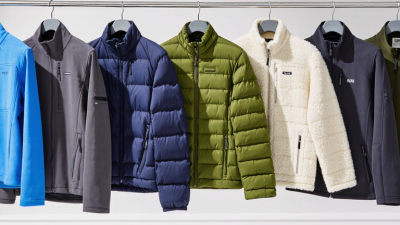
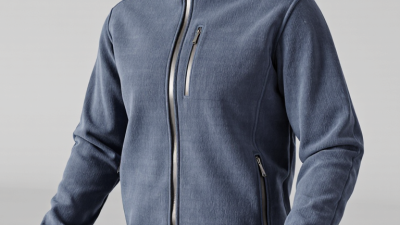
Choosing the right Polar Fleece Jacket manufacturer requires more than comparing prices. Global buyers must examine fabric quality, production consistency, lead times, and communication. A jacket may look excellent in a sample, yet feel thin after washing or lose shape during bulk production. Details matter.
This guide, “Top Polar Fleece Jacket Manufacturers for Global Buyers,” focuses on practical and verifiable selection criteria. It considers fleece weight, fiber composition, warmth, stitching, zipper performance, and size accuracy. It also reviews factory capabilities, quality-control procedures, export experience, and available certifications. Responsible manufacturers should provide clear specifications, realistic production schedules, and traceable material information. Recycled polyester options may also support sustainability goals, but buyers should verify related claims carefully.
No supplier is perfect. Even experienced factories can face fabric shortages, inspection delays, or inconsistent dye lots. That reality deserves attention. Buyers should request samples, washing tests, production references, and pre-shipment inspections before placing large orders. A low quote is not always a saving if rework, returns, or missed seasonal deliveries follow. Fit matters.
The manufacturers discussed here are assessed through a balanced lens: technical capability, product reliability, buyer support, and transparency. Regional strengths, minimum order quantities, customization services, and compliance expectations can differ widely. By comparing these factors, purchasing teams can reduce avoidable risks and build more dependable supply partnerships. The final decision should reflect the buyer’s market, customer expectations, budget, and required delivery window.
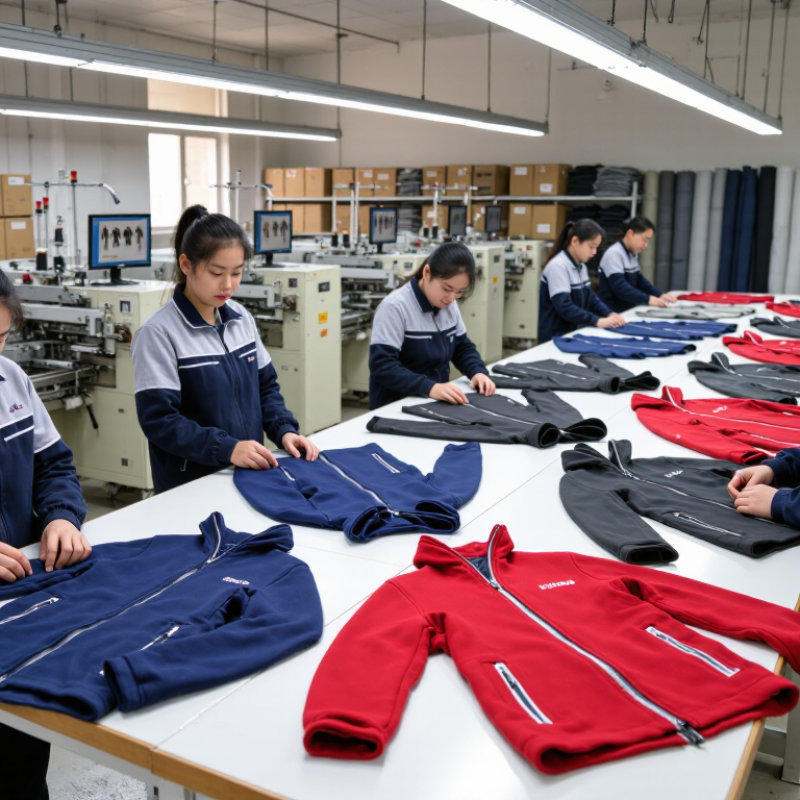
For global buyers, a reliable polar fleece jacket manufacturer proves capability through repeatable work, not polished promises. Experienced teams understand fiber blends, fleece weight, brushing, and heat retention. They can explain whether 180 GSM suits mild layering or colder outdoor use. Their advice should match your buyer profile, not simply push higher prices. Request a development sample and inspect seam tension, collar shape, zipper movement, and pocket reinforcement. Small details reveal production discipline.
Technical credibility also appears in documented testing. A dependable supplier checks fabric pilling, colorfastness, dimensional stability, and seam strength before bulk cutting. Test reports should identify methods, dates, and sample conditions. Factory records should connect approved materials to finished cartons. This traceability reduces unpleasant surprises during inspection. It also supports responsible purchasing decisions. Still, paperwork alone is not proof. An on-site audit, live production call, or independent inspection can expose gaps between procedures and daily practice.
Communication is another practical measure. Reliable manufacturers answer questions about sizing, tolerances, packaging, and shipment dates with specific data. They disclose minimum order quantities, realistic lead times, and known capacity limits. No factory is perfect. A supplier that admits a dye-lot issue may be safer than one promising zero defects. Clear corrective-action plans matter more than confident sales language. Buyers should review a pre-production sample and keep written approval records. Even then, unexpected fabric variation can occur, so inspection plans need room for revision.
Fabric weight is a practical quality indicator for comparing polar fleece jacket manufacturers. Reliable manufacturers should be able to maintain consistent fabric weight, sizing, insulation performance, and quality control across repeated production batches.
Reference values show commonly used commercial polar fleece fabric weight bands: lightweight fleece is generally around 100 GSM, midweight fleece around 200 GSM, and heavyweight fleece around 300 GSM. Actual specifications may vary by fabric construction and application.
When comparing polar fleece jacket manufacturers, start with the fiber, not the catalog image. Textile Exchange’s 2024 Materials Market Report records 124 million tonnes of global fiber production in 2023. Polyester represented about 57% of that volume. Ask suppliers for fiber composition, recycled-content evidence, and fabric weight in grams per square meter. A 200–300 GSM fleece often suits everyday layering, but weight alone cannot prove warmth.
Inspect the fabric closely. Dense, even brushing should resist early pilling. Check seam density, bar-tacked stress points, zipper alignment, and hem recovery after stretching. Request test results for abrasion, dimensional stability, colorfastness, and air permeability. ISO 12947 abrasion testing can reveal surface durability, while ISO 6330 washing procedures support repeatable care testing. These results matter more than phrases like “premium quality.” In my experience, samples sometimes perform well before washing, then lose shape after three cycles. That is a warning.
Tips: Request three production samples, not one. Wash them under the intended care label. Measure sleeve length, chest width, and hem recovery afterward. Ask whether tests used the exact production fabric. Confirm traceability documents for recycled fibers. Textile Exchange notes that recycled polyester still forms a minority of polyester output, so unsupported sustainability claims deserve careful review. Do not ignore comfort. A technically strong jacket can still feel clammy, noisy, or restrictive. Performance is partly measurable, partly experienced.
China remains a major polar fleece manufacturing hub, supported by broad textile supply chains and flexible production capacity. Factories can source recycled polyester, arrange custom knitting, and handle complex trims from one region. Large production clusters also support competitive pricing and faster sampling. However, quality can vary between factories, even within the same industrial area.
Vietnam is increasingly valued for disciplined assembly, stable export operations, and strong cut-and-sew performance. Its manufacturers often suit buyers seeking consistent bulk production and clean finishing. Turkey offers shorter delivery routes to European markets, with useful strengths in fabric development, garment construction, and smaller production runs. Some facilities respond quickly to design changes. Italy and other European regions may provide premium craftsmanship, detailed prototyping, and strict process control, but costs are usually higher.
Tips: Compare fabric weight, pilling results, seam strength, and shrinkage data before choosing a supplier. Request a pre-production sample. Check whether the sample matches bulk materials.
No region is perfect. A low price may hide weak inspection systems, while a famous production area may still contain unreliable factories. Buyers should review audit records, testing reports, production photos, and communication speed. Practical evaluation matters more than geography alone. A supplier with transparent sampling and traceable quality checks often creates fewer problems during seasonal delivery.
Top Polar Fleece Jacket Manufacturers for Global Buyers
Reliable polar fleece sourcing starts with evidence, not attractive product photos. Ask each manufacturer for current certificates, testing scope, and issuing-body details. ISO 9001 can support process control, while textile safety certificates address different risks. Do not treat them as interchangeable. For recycled polyester, request chain-of-custody records and transaction documents. Validity dates matter. An expired certificate can quietly undermine a shipment.
Customization should cover more than color and logo placement. Confirm fabric weight, recycled content, warmth, pilling resistance, shrinkage, and colorfastness before production. Zippers, elastic cuffs, drawcords, and labels also need review. A practical supplier should provide a pre-production sample and measurable specifications. Small differences in fleece density can change comfort and freight weight. This is often overlooked.
Global compliance requires destination-specific checks. Fiber composition, care labels, country-of-origin marks, packaging, and chemical restrictions must match the sales market. Request laboratory reports for restricted substances, especially when selling in multiple regions. A factory audit can verify working conditions, traceability, and quality procedures, but one visit is not permanent proof. Independent inspections during production offer stronger control. Even careful teams make mistakes. Test reports may cover one fabric batch, not every future order, so buyers should repeat checks when materials or suppliers change.
A practical comparison of common manufacturer profiles and verification points for international polar fleece jacket sourcing. Capacities, minimum order quantities, and lead times are typical industry ranges and should be confirmed during supplier due diligence.
| Manufacturer Profile | Typical Product Capability | Common Fabric Specifications | Typical MOQ | Customization Options | Recommended Quality Tests | Relevant Certifications and Standards | Key Global Compliance Requirements | Typical Production Lead Time | Buyer Verification Checklist |
|---|---|---|---|---|---|---|---|---|---|
| High-Volume Integrated Factory Suitable for established retail and workwear programs |
Cut-and-sew production, fabric knitting or approved mill sourcing, automated spreading, embroidery, heat-transfer printing, packing, and export documentation. | 100% polyester polar fleece; approximately 150–350 g/m²; anti-pill, brushed, bonded, or recycled-content options. | Approximately 1,000–3,000 pieces per color and style | Custom patterns Private labels Color matching Packaging | Fabric weight, dimensional stability, colorfastness to washing and rubbing, pilling resistance, seam strength, zipper performance, and appearance after laundering. | ISO 9001 may support quality management; OEKO-TEX Standard 100 may apply to tested textile components; GRS may apply when recycled claims are certified. | REACH requirements for the European Union; product safety and labeling rules in the destination market; fiber-content disclosure; restricted-substance testing; social-compliance assessment where required by the buyer. | 45–75 days after approval of samples, materials, and purchase order | Confirm valid certificates, scope and expiry dates; request laboratory reports for the actual style; verify factory audit records, traceability, and production capacity. |
| Performance Outdoor Apparel Factory Suitable for trekking, uniforms, and technical layering systems |
Pattern engineering, articulated sleeves, ergonomic panels, bonded or taped seams, moisture-management finishing, and compatibility with outer-shell layering. | Lightweight or midweight polyester fleece; approximately 100–280 g/m²; stretch fleece, grid fleece, anti-static, or quick-dry constructions. | Approximately 500–1,500 pieces per style, depending on fabric availability | Technical patterns Functional trims Reflective details Fit blocks | Moisture-management performance, pilling, abrasion resistance, stretch recovery, seam slippage, dimensional change, colorfastness, and wash durability of prints or transfers. | ISO 9001 may apply to the management system; bluesign or OEKO-TEX credentials may be relevant to textile chemistry and material processing; ISO 14001 may support environmental management. | EU REACH, chemical restrictions in the United States and Canada, country-specific care labeling, flammability rules where applicable, and accurate performance claims supported by testing. | 50–80 days after technical package approval | Check whether performance claims are tested on the finished garment; review seam and trim specifications; confirm approved laboratory methods and wash-cycle conditions. |
| Recycled-Fiber Specialist Suitable for sustainability-focused collections |
Garments made with certified recycled polyester, recycled-content documentation, trim sourcing, mass-balance or transaction-certificate support, and sustainability reporting. | Recycled polyester fleece; commonly 150–300 g/m²; post-consumer recycled content may be specified by percentage. | Approximately 800–2,000 pieces per style and color | Recycled content Low-impact packaging Hangtags Traceability | Fiber composition, recycled-content verification, colorfastness, pilling, dimensional stability, abrasion, and testing for restricted substances. | Global Recycled Standard (GRS) is relevant to certified recycled materials and chain of custody; Recycled Claim Standard (RCS) may apply to recycled-content claims; OEKO-TEX Standard 100 may apply to harmful-substance testing. | Do not make recycled-content or environmental claims without valid scope certificates and transaction documentation; comply with destination-market labeling and green-claims rules. | 45–75 days, subject to certified yarn and fabric availability | Verify the certificate holder, product scope, transaction certificate, recycled percentage, chain of custody, and whether all trims are included in the claim. |
| Small-Batch Custom Manufacturer Suitable for emerging labels, promotional programs, and test launches |
Flexible sampling, low-volume cut-and-sew production, digital decoration, small custom runs, and direct coordination with designers or sourcing agents. | Standard polyester fleece; approximately 180–320 g/m²; usually selected from existing stock colors and constructions. | Approximately 100–500 pieces per style, with higher unit costs | Small runs Custom labels Embroidery Limited color range | Basic measurement inspection, fabric weight, colorfastness, pilling, zipper function, seam appearance, and pre-shipment visual inspection. | Certification availability varies; OEKO-TEX-certified fabrics can be requested from approved mills. Factory-level ISO certification should be independently verified rather than assumed. | Destination-market fiber labeling, care labeling, chemical restrictions, packaging requirements, and applicable consumer-product safety rules remain the buyer's responsibility to confirm. | 25–50 days after sample approval and material confirmation | Confirm subcontracting arrangements, sample-to-bulk consistency, inspection criteria, payment terms, labeling accuracy, and the identity of the actual production site. |
| Corporate Workwear Manufacturer Suitable for employee uniforms and repeat replenishment orders |
Size-range grading, repeat-order control, barcode labeling, uniform specification management, reinforced construction, and scheduled replenishment programs. | Durable polyester fleece; approximately 200–350 g/m²; anti-pill, anti-static, high-visibility-compatible, or easy-care options. | Approximately 500–2,000 pieces per style, with reorder programs often using existing patterns | Size grading Logo application Uniform packs Reorders | Seam strength, tear strength, abrasion, pilling, colorfastness, dimensional stability, logo durability, measurement tolerances, and batch consistency. | ISO 9001 may support controlled quality processes; ISO 45001 can be relevant to occupational health and safety management; OEKO-TEX may apply to tested textile materials. | Country-specific workwear and personal protective equipment rules apply when protective claims are made. Ordinary fleece jackets must not be marketed as certified protective equipment without the required conformity assessment. | 40–70 days for initial production; 25–45 days for approved repeat orders | Define the technical specification, tolerances, logo placement, approved sample, inspection level, replenishment terms, and responsibility for regulatory testing. |
| Export-Oriented Multi-Market Factory Suitable for buyers serving several destination countries |
Multi-language labeling, export packing, consolidated shipments, compliance-document management, product testing coordination, and experience with different buyer manuals. | Polyester fleece in light, midweight, and heavyweight constructions; recycled and conventional options subject to mill availability. | Approximately 1,000–5,000 pieces per style, depending on market and material requirements | Market-specific labels Mixed size ratios Retail packing Compliance files | Finished-product safety, fiber composition, colorfastness, pilling, dimensional change, packaging compliance, carton drop testing, and destination-specific chemical screening. | ISO 9001, OEKO-TEX, GRS, RCS, ISO 14001, or social-audit reports may be available depending on the facility and supply chain; each document must be checked for current scope. | EU REACH and textile labeling for European sales; U.S. fiber-content, care-labeling, and consumer-product requirements; Canadian and Australian requirements where applicable; import documentation and customs classification. | 50–90 days for new programs; timing depends on testing, approvals, and shipping arrangements | Map every destination market before production; confirm applicable standards, testing laboratories, label language, tariff classification, documentation, and importer-of-record responsibilities. |
Important: Certifications are not automatically transferable between factories, products, or production sites. Buyers should verify certificate validity, certification scope, chain of custody, test methods, and the compliance requirements of each destination market before placing an order.
Global buyers should compare polar fleece jacket suppliers through evidence, not attractive quotations alone. Request fabric weight, fiber composition, colorfastness results, and a clear size chart. A 280 GSM fleece feels warmer than a 180 GSM option, but it may increase freight costs. Ask for physical samples before approving bulk production. Check stitching, zipper movement, seam strength, and whether the fabric sheds after washing.
Supplier evaluation Supplier evaluation should also include production capacity, minimum order quantity, lead time, and communication quality. Reliable manufacturers provide consistent technical sheets and explain possible variations. Verify factory certificates through current documents, not screenshots. Discuss packaging, carton dimensions, labeling rules, and delivery terms in writing. A pre-shipment inspection can catch uneven sleeves or incorrect colors before the goods leave the factory.
Do not choose the lowest offer too quickly. A cheap sample may hide weak fleece density or unstable sizing. I have seen comparisons fail because buyers ignored replacement procedures and payment milestones. That mistake is easy to repeat. Confirm how defects will be measured, reported, and corrected. Start with a controlled trial order when the supplier is new. Record every approved detail, including fabric swatches and measurement tolerances. Even a careful process has gaps, so review supplier performance after delivery and adjust the next order.